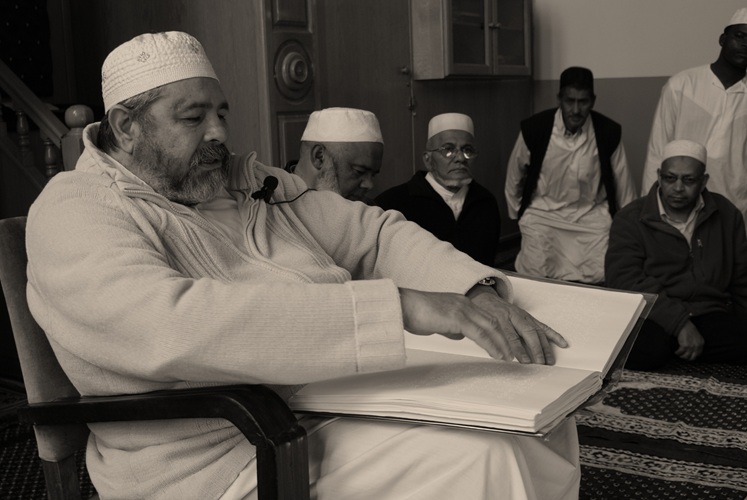
Empowering visually impaired students through inclusive Islamic education, from Arabic Braille to Qur'anic recitation. A programme of Hospital Welfare Movement since the late 1980s.
Madrassa Tul Khair began as Madrassa Tul Amal in the late 1980s, initially chaired by Yusuf 'Mota Bhai' Johnson with Hafiz Abdul Kariem Salie as one of its first teachers. Though independent at first, the madrassa was later adopted by Hospital Welfare Movement.
In 2002, under the leadership of Hafith Abdul Kariem Salie, the madrassa was relaunched as Madrassa Tul Khair with 15 students and moved to Habibia Girls College in Athlone. By 2006, it had relocated to Habibia Primary School and continued to grow under successive dedicated teachers and principals.
Today, the madrassa meets every Saturday afternoon from 15:00 to 17:00 during school terms at no cost to students. Resources, transportation and educational expeditions are all sponsored by Hospital Welfare.
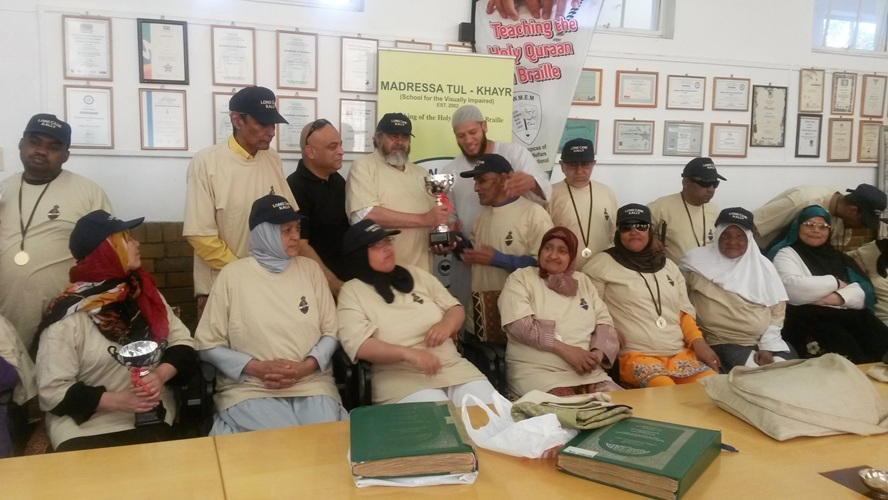
Students progress through a carefully structured learning journey in Arabic Braille and Qur'anic studies.
Students begin by learning the Arabic alphabet in Braille, a tactile system that opens the door to Islamic literacy for the visually impaired.
Progression to the Qaaida builds the foundation for correct Qur'anic pronunciation and Tajweed (rules of recitation).
Students graduate to the Arabic Braille Qur'an, six volumes, each containing five chapters. Learning and recitation are continuous and lifelong.
Supplementary subjects include Islamic jurisprudence (Fiqh), Tajweed, and broader Islamic studies to develop well-rounded students.
To be a beacon of inclusive Islamic education, where visually impaired students are empowered to excel academically, spiritually, and socially, fostering a community of lifelong learners and contributors to society.
To provide a nurturing and accessible Islamic educational environment for visually impaired students, fostering their holistic development through a tailored curriculum, adaptive technologies, and a supportive community.
Increasing Braille literacy rates, introducing vocational skills and ensuring every student reaches their full academic potential.
Mentorship programmes, social integration and community awareness campaigns to promote understanding and acceptance of visual impairments.
Investing in adaptive technologies, including screen readers, Braille displays and digital Qur'an apps, and ongoing teacher training in assistive tools.
Every contribution helps provide Braille materials, transportation and a nurturing educational environment for visually impaired students. Your generosity changes lives.